Considering a HCD Dealer License? Let’s Talk About Your Place of Business!
Your HCD dealership needs a place to call home; however, not every address will qualify. Learn California’s requirements for dealer offices, home-based businesses, zoning, inspections, and more before choosing your location.
If you're applying for a California HCD Manufactured Home/Mobilehome Dealer license, one of the requirements you'll need to address is your established place of business.
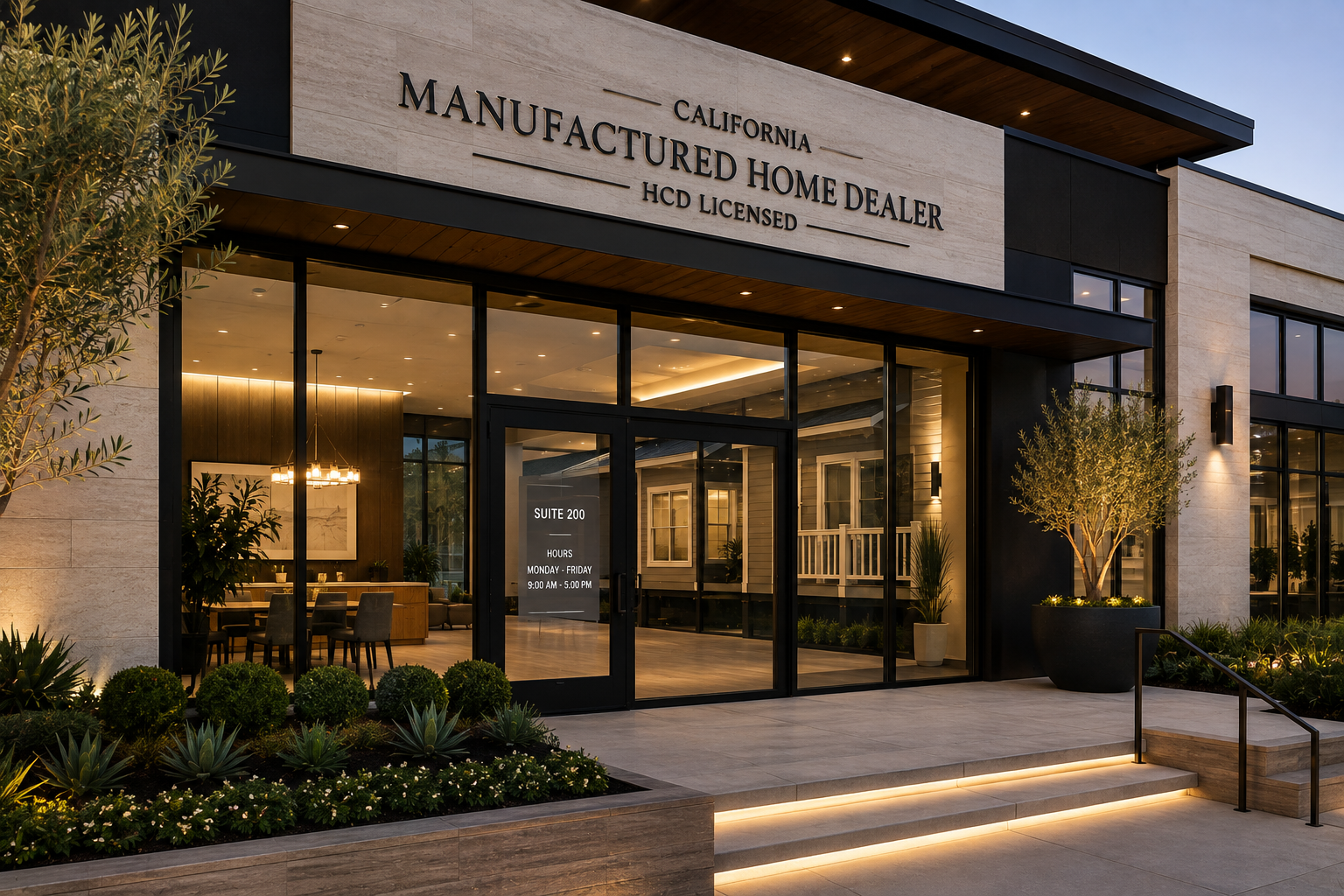
California law requires a dealer to maintain a qualifying physical place of business, and HCD will not issue a dealer license to an applicant who does not have one.
Before leasing an office, converting part of your home, or choosing another location for your dealership, it's important to understand what California actually requires.
Does an HCD Dealer Need a Physical Place of Business?
Yes.
California Health and Safety Code § 18045.5(a) states that HCD may not issue a dealer license to an applicant who does not have an established place of business.
For dealers, the established place of business must include an office located within the State of California.
This means an HCD dealer cannot satisfy the requirement with only a mailing address or P.O. box.
What Qualifies as an HCD Dealer's Established Place of Business?
The requirements are further explained in California Code of Regulations, Title 25, § 5013.
Under this regulation, an applicant for or holder of an MH-unit dealer license must maintain an established place of business.
The dealer's office must:
- Be constructed so that it is not temporary, transitory, or mobile in nature
- Comply with applicable construction standards
- Comply with local zoning regulations
These requirements are important to consider before committing to a location. HCD licensing does not override your city's or county's zoning requirements.
Can I Use My Home as an HCD Dealer Office?
California law does not categorically prohibit using part of a residence as a dealer's established office. However, a residential office must meet additional requirements.
Under Health and Safety Code § 18045.5(b), if part of a single-unit or multiple-unit dwelling is being used as the licensed office, the room or rooms used as the office must:
- Be devoted exclusively to the licensee's office
- Be occupied for that purpose
- Be located on the ground floor
- Have a direct entrance from the exterior of the building
Similar requirements apply when the proposed office consists of rooms within a hotel, roominghouse, or apartment house building.
The location must also comply with the construction and local zoning requirements established by 25 CCR § 5013.
In other words, simply listing your home address on an HCD dealer application is not enough. The actual office space must meet the applicable state and local requirements.
Can a Manufactured Home Be Used as an HCD Dealer Office?
Yes, potentially.
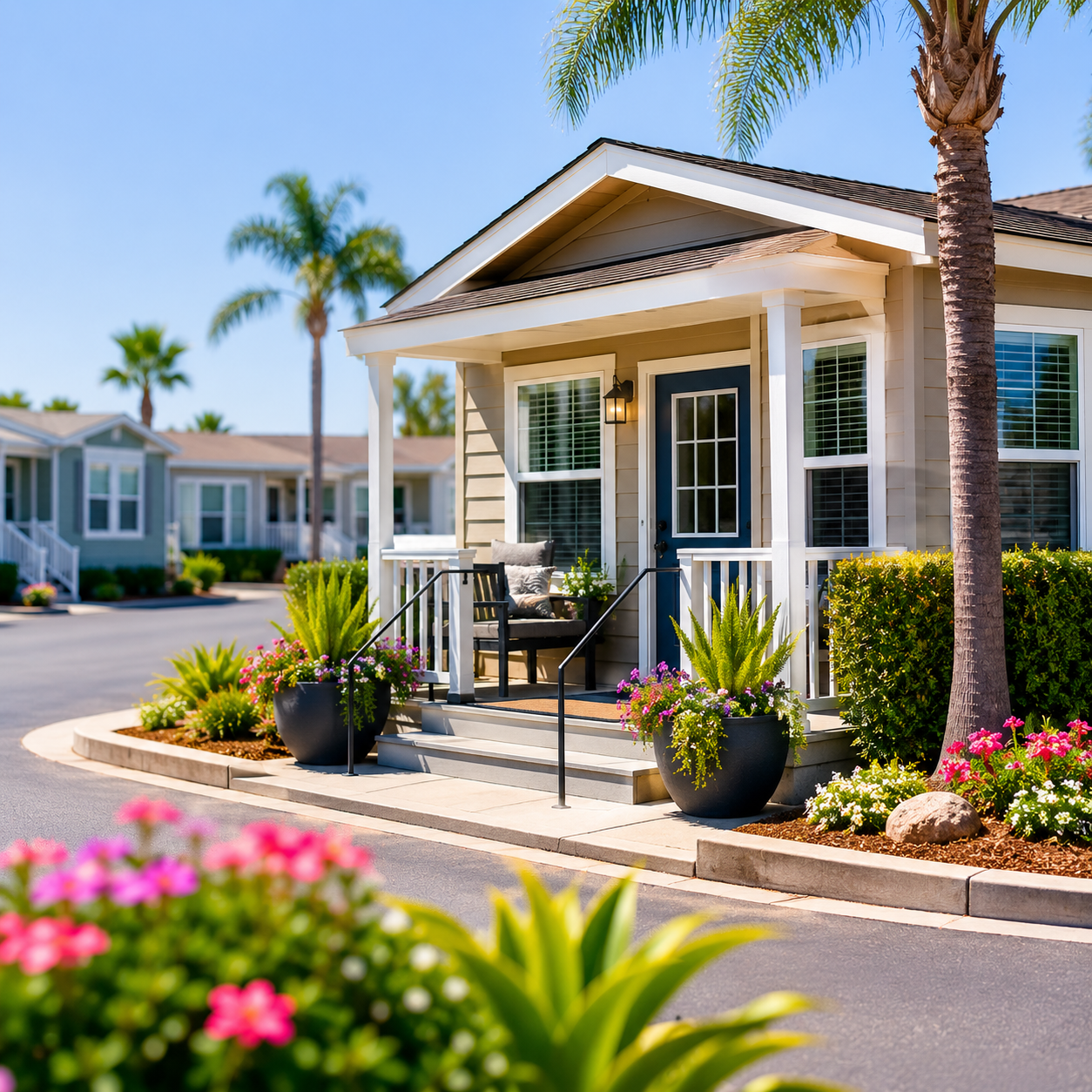
25 CCR § 5013 specifically allows an MH-unit or commercial modular to serve as the dealer's office, provided it otherwise complies with the law.
There is an important restriction: the unit cannot be part of the dealer's inventory or be offered or subject to sale while it is being used as the office.
This means a dealer cannot simply use one of the manufactured homes currently being offered for sale as the dealership's permanent licensed office.
Does an HCD Dealer Need a Sales Lot?
The established-place-of-business laws focus on the dealer having a qualifying office. They do not state that every dealer must maintain a traditional automobile-style sales lot filled with inventory.
This distinction can be important for manufactured home dealers whose business model does not involve maintaining numerous homes at the dealership location.
However, the office itself must still satisfy HCD's established-place-of-business requirements.
Does HCD Inspect the Dealer's Place of Business?
Your established place of business must be available to HCD.
Under Health and Safety Code § 18045.5(c), the established place of business must be open during business hours for HCD representatives to inspect:
- The premises
- Pertinent records
- Manufactured homes, mobilehomes, or commercial coaches
If dealer records are maintained somewhere other than the principal business location, the location where those records are stored must also be open for inspection during normal business hours.
What Must Be Displayed at the Dealership?
Under Health and Safety Code § 18045.6(c), the dealer's HCD license must be posted in a location conspicuous to the public at the established place of business.
The HCD licenses of each salesperson employed by the dealer must also be posted there.
What If I Move My Dealership?
An established place of business is part of the dealer's occupational license, so moving the business requires notification to HCD.
Health and Safety Code § 18045.6(a) requires a dealer to notify HCD when the site or location of the established place of business changes.
Title 25 provides more specific procedural requirements. Under 25 CCR § 5024, a licensee relocating, eliminating, or adding an established place of business must notify HCD at least 10 calendar days before the effective date of the change.
For a relocation, HCD requires applicable forms, including HCD OL 12 and HCD OL 21, an exterior photograph of the new office, and the applicable relocation fee.
Dealers adding an additional established place of business are also subject to additional application and documentation requirements.
Before Choosing Your HCD Dealer Location
It is a good idea to verify that a proposed location qualifies before signing a lease, purchasing property, or making significant improvements to an office.
Consider:
- Is the office physically located in California?
- Is it permanent rather than temporary, transitory, or mobile?
- Does the office comply with applicable construction standards?
- Does local zoning permit the proposed dealer business?
- If you're using part of a residence, is the office exclusively devoted to the business, on the ground floor, and directly accessible from outside?
- If you're using an MH-unit as the office, is it separate from your inventory and not being offered for sale?
- Can the location be made available for HCD inspection during business hours?
If there is uncertainty about whether a particular property qualifies, verify the location with HCD and the appropriate local zoning authority before relying on it for your license application.
Place of Business Is Only One Part of Becoming an HCD Dealer
Establishing a qualifying place of business is an important part of obtaining a California Manufactured Home/Mobilehome Dealer license, but it is not the entire licensing process.
MH-unit Dealer applicants must also satisfy HCD's other licensing requirements, including preliminary education and the HCD licensing examination.
New World Enterprises provides California HCD-approved Dealer Preliminary Education for applicants pursuing their Manufactured Home/Mobilehome Dealer license.
Our Dealer course is online and self-paced, with six months of access and practice quizzes to help students prepare for the HCD examination.
HCD Dealer Preliminary Education — $250
California Laws Referenced
California Health and Safety Code § 18045.5 — Requires an established place of business, establishes requirements for dealer offices and residential offices, and provides for HCD inspection.
California Health and Safety Code § 18045.6 — Addresses changes in business location, posting licenses, display locations, and certain transactions conducted away from the established place of business.
California Code of Regulations, Title 25, § 5013 — Establishes requirements for a dealer's established place of business, including construction and zoning requirements and use of an MH-unit as an office.
California Code of Regulations, Title 25, § 5024 — Establishes procedures for relocating, eliminating, or adding an established place of business.
Applicants should refer to the current California statutes, regulations, and HCD application instructions when determining whether a particular location satisfies licensing requirements.
This article is provided for general educational purposes and is not legal advice. Requirements can vary based on the proposed location and local zoning regulations. Applicants should verify their individual circumstances with HCD and the appropriate local authority.